(Report by Zhang Hui) On the afternoon of April 17, a lecture titled "Application and Development of Organic Methane Reforming and Biomass Gasification for Green Hydrogen Production Technology" was successfully held in Smart Classroom L4103. As a key event of the "University Academic Week," the lecture featured industry expert He Xiaoping. He serves as the Plant Manager of Wuchang District Food Waste Treatment Plants No. 1 and No. 2, Executive Deputy General Manager of Wuhan Tianji Ecological Energy Technology Co., Ltd. and Wuhan Tanhuan Ecology Co., Ltd., and General Manager of Wuhan Tianji Environmental Engineering Co., Ltd. The lecture was hosted by Associate Professor Zhang Hui of the college.
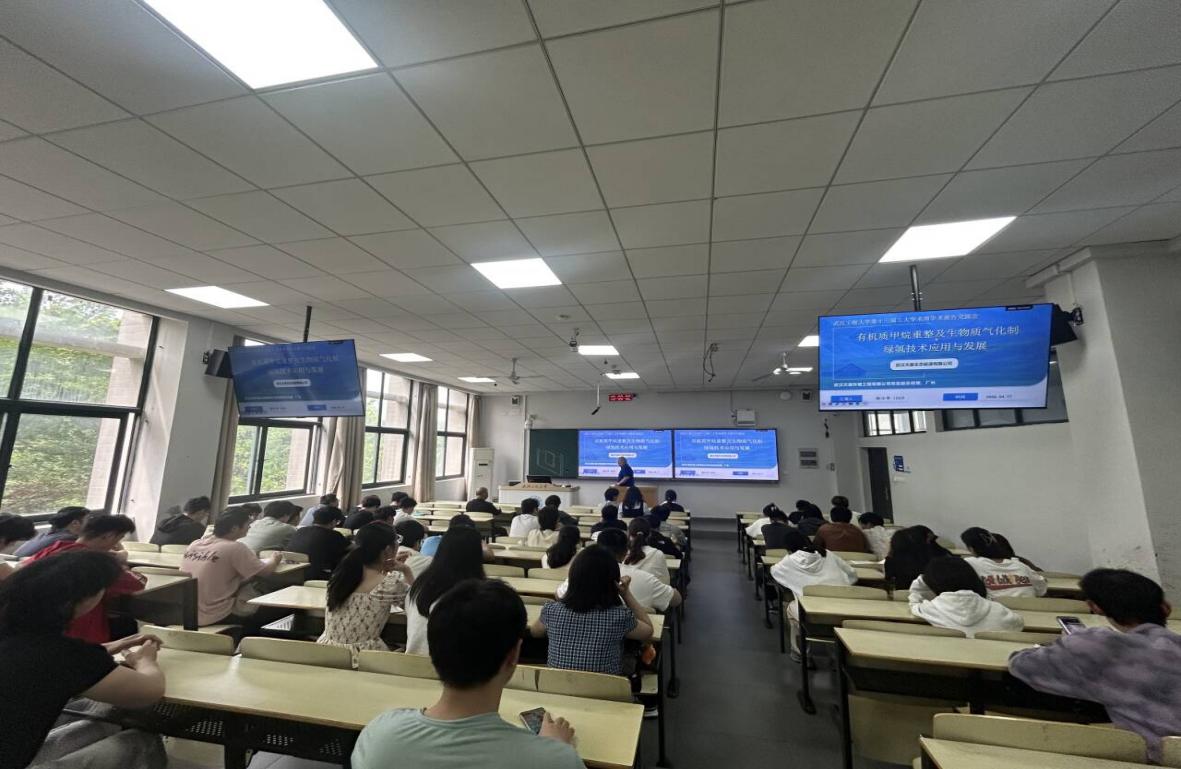
During the lecture, He Xiaoping shared cutting-edge and practical technological insights with over a hundred faculty members and students specializing in environmental engineering, energy chemical engineering, and related fields. His presentation focused on three major technological directions: "coupling food waste resource utilization with SOFC power generation," "biomass gasification with PSA for green hydrogen purification," and "biogas upgrading and reforming for hydrogen production." Drawing on recent engineering practices from his company, He first introduced 4MW-scale SOFC clean power generation technology. He explained that biogas generated from anaerobic digestion of food waste can be efficiently converted into electricity through high-temperature fuel cells, transitioning from traditional combustion to high-efficiency, low-carbon utilization, with a target system power generation efficiency of up to 65%. He highlighted the modular construction approach centered on "50kW standard units + multi-unit integration + station-level control," which adapts well to fluctuations in biogas composition and significantly enhances engineering replicability.
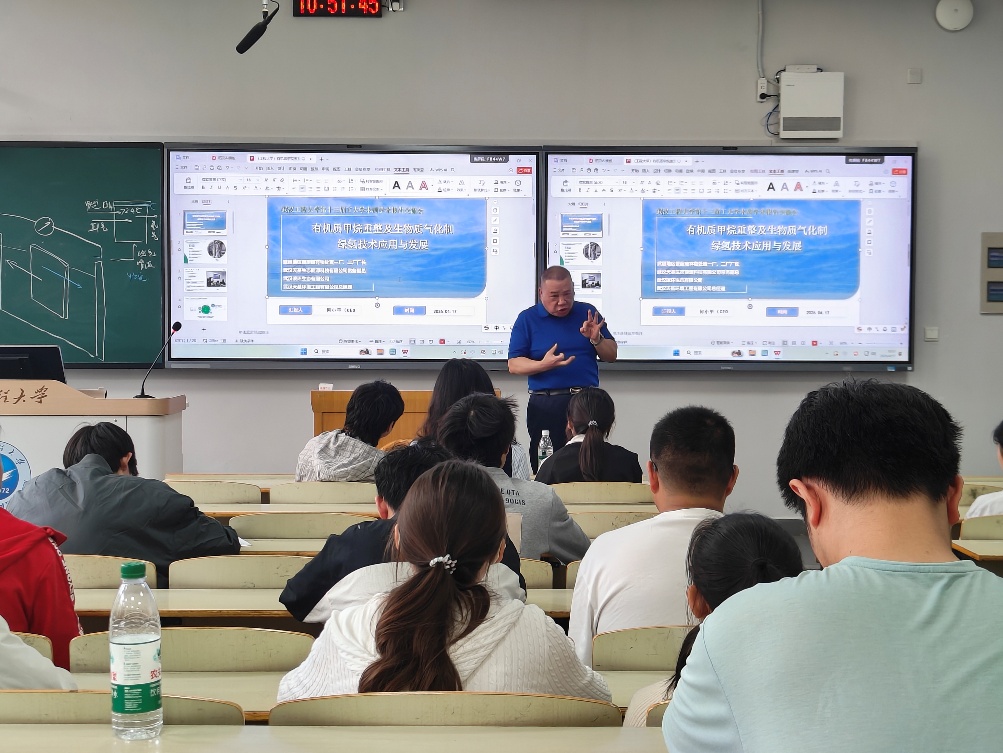
He then elaborated on the process of biomass gasification coupled with PSA for green hydrogen production. Addressing challenges such as poor uniformity and high processing costs of complex biomass feedstocks, he demonstrated how "dual-bed gasification technology" integrates the broad material adaptability of fluidized beds with the high syngas quality of entrained-flow beds. This approach truly enables "using cheap feedstocks to produce clean gas" while converting solid waste into high-value hydrogen energy.
Furthermore, He Xiaoping discussed the prospects of 4MW-scale biogas upgrading and reforming for hydrogen production, highlighting breakthroughs in anti-coking, anti-toxicity reforming catalysts, and adaptive dynamic control systems. He emphasized that this pathway could provide stable, low-cost, localized green hydrogen sources to support Wuhan's goal of becoming a "Hydrogen Energy Capital."
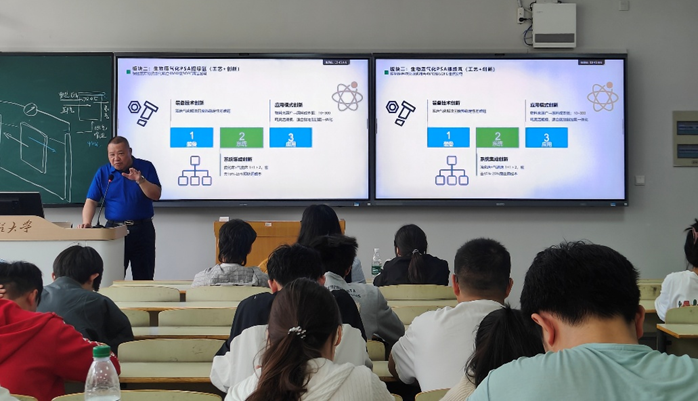
"Solid waste is a resource placed in the wrong place—it is an urban mine," He said at the conclusion of the lecture. He encouraged students to recognize that the boundaries between environmental and energy fields are increasingly blurred, creating a strong demand for interdisciplinary talents who understand processes, can integrate systems, and possess a circular economy mindset. He urged students to master their professional knowledge while actively embracing new opportunities in hydrogen energy and digital intelligence, striving to become outstanding engineering talents capable of addressing real-world environmental and energy challenges.
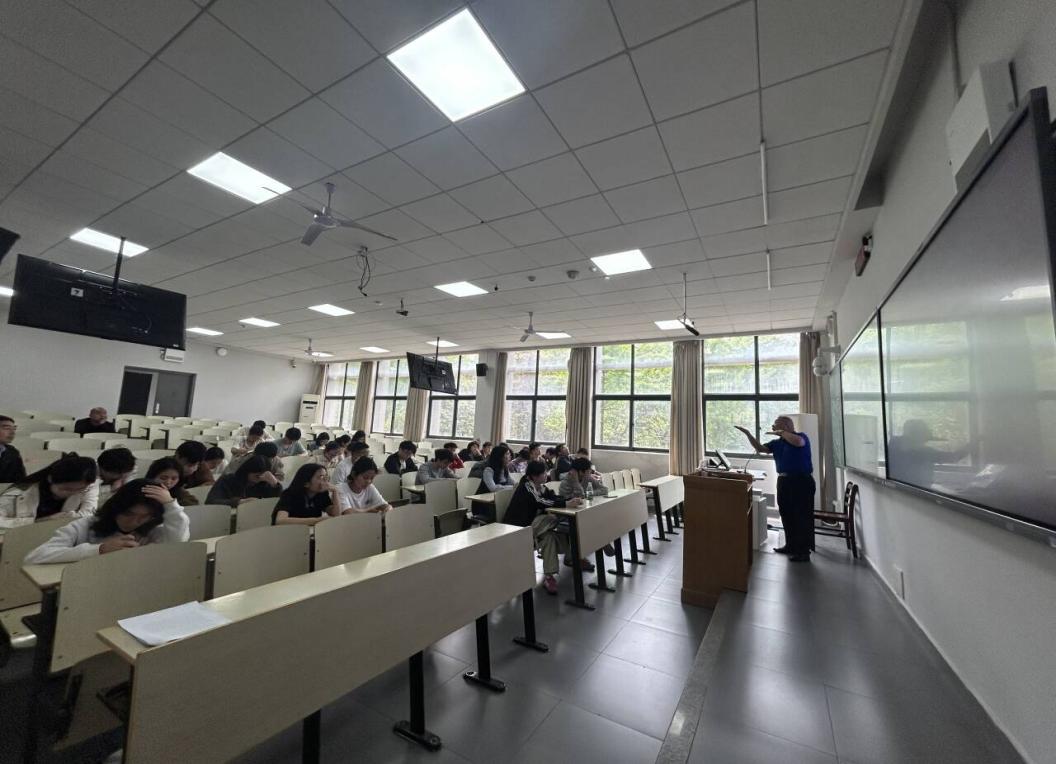
This lecture was not only an academic presentation on advanced green hydrogen technologies but also an in-depth dialogue focused on the green circular economy and industrial implementation. Against the backdrop of advancing carbon peak and neutrality goals and accelerating energy transition, students in environmental disciplines are encouraged to proactively seek their own paths and career directions amid the wave of green, low-carbon technological and industrial transformation.
Reviewed by Li Junbo
